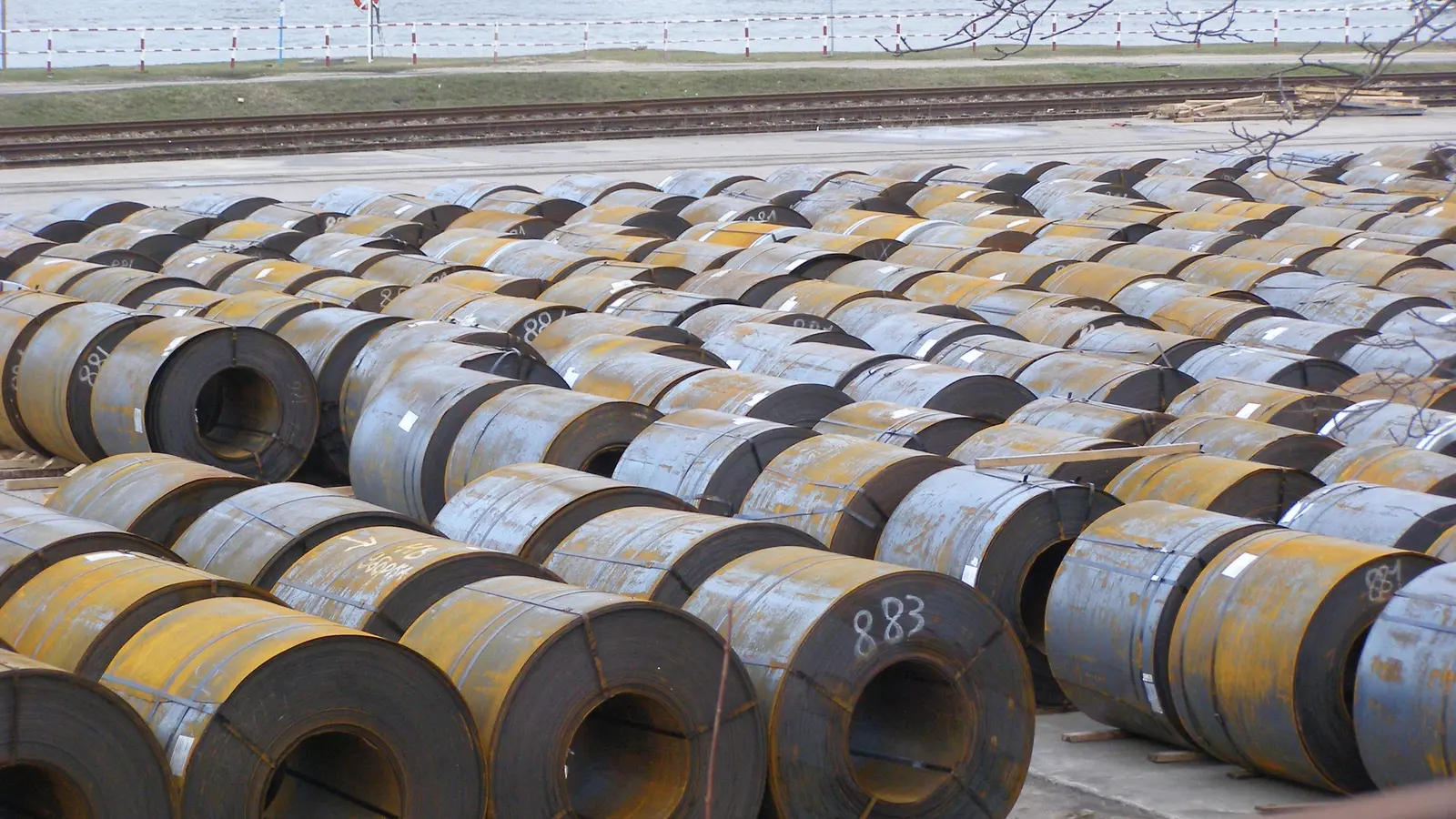

To calculate the CBAM cost of an import line, multiply the certificates you must surrender by the certificate price. In 2026 the certificate count is the goods' embedded emissions, with a 10% mark-up on most default values, minus 97.5% of the CBAM benchmark for the same goods, rounded up: 1,000 tonnes of Indian hot-rolled steel comes to 3,373 certificates and €253,919.44.
The Commission publishes all 6 inputs. The examples below were run through the CBAM Data engine, so you can check each step against your own lines.
How is CBAM calculated? The formula
CBAM cost is certificates times price. The certificates are the embedded emissions minus a free allocation adjustment, which takes off what an EU plant still gets for free. For one import line:
embedded emissions   = tonnes × default value × (1 + mark-up)
adjustment           = tonnes × CBAM factor × CBAM benchmark
subject to CBAM      = embedded emissions − adjustment
certificates         = round up (subject to CBAM − carbon price deduction)
cost                 = certificates × certificate price
With verified actual data, the actual value replaces the marked-up default. The adjustment also has a cross-sectoral correction factor in it, but that's 100% for every year from 2026 to 2030 (Implementing Decision (EU) 2026/1862), so it changes nothing.
The 6 inputs and their sources:
| Input | Source | 2026 value |
|---|---|---|
| Default value | Annex I of Reg (EU) 2025/2621, corrected by Reg (EU) 2026/1740, by CN code and origin | per code |
| Mark-up | Same regulation | 10%, fertilisers 1% |
| CBAM benchmark | Annex of Reg (EU) 2025/2620, Column B for default values, by CN code and route | per code and route |
| CBAM factor | Directive 2003/87/EC Art. 10a(1a), the share of the benchmark deducted | 97.5% |
| Carbon price deduction | Article 9, verified price paid in the country of origin | 0 unless proven |
| Certificate price | Commission, from EU ETS auctions | €75.36 Q1, €75.28 Q2 |
2 rules change results often. Indirect emissions count for cement and fertilisers only, so for steel and aluminium the default is the direct value. And certificates are whole units, so the count always rounds up.
Why most CBAM cost examples understate 2026
The common mistake is to charge 2.5% of the embedded emissions in 2026, as if the CBAM factor were the share you pay. It isn't. The factor is the share of the benchmark you deduct, and the benchmark is what the cleanest EU plants emit, not what your supplier emits. Take the steel line in Example 1: 2.5% of 4,708 tonnes gives 118 certificates and €8,883.04. The real 2026 cost is €253,919.44, about 29 times more.
So dirty goods already pay for most of their emissions in 2026. Clean goods pay little, because their emissions sit close to the benchmark. The gap opens every year as the factor falls, and from 2034 the whole of the emissions is charged.
Example 1: hot-rolled steel from India
1,000 tonnes of CN 7208 39 00 from India, imported in Q2 2026 with no supplier data, costs €253,919.44.
| Step | Calculation | Result |
|---|---|---|
| Default value | India, heading 7208, route C | 4.28 tCO2e/t |
| With mark-up | 4.28 × 1.10 | 4.708 tCO2e/t |
| Embedded emissions | 1,000 × 4.708 | 4,708 tCO2e |
| CBAM benchmark | Column B, route C | 1.37 tCO2e/t |
| Free allocation adjustment | 1,000 × 97.5% × 1.37 | 1,335.75 tCO2e |
| Subject to CBAM | 4,708 − 1,335.75 | 3,372.25 tCO2e |
| Certificates | round up 3,372.25 | 3,373 |
| Cost | 3,373 × €75.28 | €253,919.44 |
Example 2: the same steel in later years
The same 1,000 tonnes cost €288,698.80 in 2027 and €365,785.52 in 2030. The default value stays put, the mark-up climbs and the CBAM factor falls, so less comes off every year. At a constant €75.28:
| Year | Emissions per tonne | Factor | Adjustment | Certificates | Cost |
|---|---|---|---|---|---|
| 2027 | 4.28 × 1.20 = 5.136 | 95% | 1,301.5 t | 3,835 | €288,698.80 |
| 2028 | 4.28 × 1.30 = 5.564 | 90% | 1,233 t | 4,332 | €326,112.96 |
| 2030 | 5.564 | 51.5% | 705.55 t | 4,859 | €365,785.52 |
The factor keeps falling: 39% in 2031, 26.5% in 2032, 14% in 2033 and 0% from 2034, when this line costs €418,933.20. Benchmarks are only set up to 2030, so for later years the engine keeps the 2028 to 2030 value and says so. The CBAM cost chart plots the whole curve.
Example 3: aluminium slabs from China and India
500 tonnes of CN 7601 10 10 cost €72,042.96 from China and €25,218.80 from India in 2026. Same goods, same year, same benchmark: the origin's default value is the only difference.
| China | India | |
|---|---|---|
| Default value, route K | 3.0 | 1.87 |
| With 10% mark-up | 3.3 | 2.057 |
| Embedded emissions | 1,650 tCO2e | 1,028.5 tCO2e |
| Adjustment, 500 × 97.5% × 1.423 | 693.7125 | 693.7125 |
| Subject to CBAM | 956.2875 | 334.7875 |
| Certificates | 957 | 335 |
| Cost at €75.28 | €72,042.96 | €25,218.80 |
The origin alone moves this line by 65%. The adjustment is the same for both, so every extra tonne of emissions in the default is paid in full.
Example 4: fertiliser, where indirect emissions count
2,000 tonnes of CN 3102 10 12, urea in aqueous solution, from Egypt in 2026 cost €25,369.36. Fertilisers include indirect emissions and carry a 1% mark-up, not 10%.
| Step | Calculation | Result |
|---|---|---|
| Default value | direct 0.44 + indirect 0.02, published total | 0.46 tCO2e/t |
| With mark-up | 0.46 × 1.01 | 0.4646 tCO2e/t |
| Embedded emissions | 2,000 × 0.4646 | 929.2 tCO2e |
| Free allocation adjustment | 2,000 × 97.5% × 0.304 | 592.8 tCO2e |
| Subject to CBAM | 929.2 − 592.8 | 336.4 tCO2e |
| Certificates | round up | 337 |
| Cost | 337 × €75.28 | €25,369.36 |
The same line from Russia uses a total of 0.49 and costs €29,961.44.
Example 5: a small line of fasteners
40 tonnes of CN 7318 15 95, screws and bolts, from China in 2026 cost €17,163.84, unless the importer's CBAM imports for the whole year stay at or below 50 tonnes. The default for the heading is 6.375 tCO2e per tonne, 7.013 with the mark-up, against a route C benchmark of 1.364.
| Step | Result |
|---|---|
| Embedded emissions | 280.5 tCO2e |
| Adjustment, 40 × 97.5% × 1.364 | 53.196 tCO2e |
| Subject to CBAM | 227.304 tCO2e |
| Certificates | 228 |
| Cost | €17,163.84 |
This line is below 50 tonnes, but that doesn't exempt it on its own. If the importer's total CBAM imports for the year stay at or below 50 tonnes, the importer is exempt and pays nothing. If the year's total passes 50 tonnes, this line is charged like any other. More on how the count works: the 50-tonne threshold.
Mistakes that change the answer
Each of these 6 mistakes changes the certificate count.
- Looking up the default at the wrong code length. Most defaults are published at a four- or 6-digit heading. An 8-digit code takes the most specific row that covers it. After the 31 July 2026 correction, many rows moved between code lengths.
- Adding indirect emissions for steel or aluminium. They count only for cement and fertilisers.
- Forgetting the mark-up, or applying it to verified actual data, where it doesn't apply.
- Charging 2.5% of the emissions. The CBAM factor isn't a share of your emissions. In 2026 you deduct 97.5% of the benchmark and pay for the rest.
- Using the wrong quarter's price. Each 2026 quarter has its own price, applied to goods imported in that quarter.
- Treating a small shipment as exempt. The 50 t threshold is per importer per calendar year.
FAQ
How do you calculate CBAM certificates?
Multiply the tonnes imported by the emissions per tonne. Take off the free allocation adjustment, which is the tonnes times the CBAM factor times the CBAM benchmark, then round up to a whole certificate. In 2026 the factor is 97.5%, under Article 10a(1a) of Directive 2003/87/EC.
Do you pay CBAM on all embedded emissions?
No, not before 2034. In 2026 you pay on the emissions above 97.5% of the CBAM benchmark. The share deducted falls to 95% in 2027, 90% in 2028 and 51.5% in 2030, and from 2034 nothing comes off.
Does the mark-up apply to actual emissions data?
No. The mark-up only applies to default values: 10% in 2026 for most goods and 1% for fertilisers. Verified actual emissions from the installation are used as they are.
Can a carbon price paid abroad reduce the CBAM cost?
Yes. Article 9 lets you deduct a carbon price effectively paid in the country of origin, but only if it's proven. Without that proof the deduction is zero.
Which certificate price applies to a 2026 import?
The price of the quarter the goods were imported in: €75.36 for Q1 2026 and €75.28 for Q2 2026, both published by the Commission.
Check your own lines
The CBAM calculator runs this formula for any CN code, origin, tonnage and year, and shows each step with its article. To run it on every import line inside an ERP or customs system, the same calculation is one call to /v1/resolve in the CBAM API.
Sources: Regulation (EU) 2023/956, Articles 6(2)(c), 7, 9 and 31, as amended by Regulation (EU) 2025/2083. Default values from Regulation (EU) 2026/1740. CBAM benchmarks from Implementing Regulation (EU) 2025/2620, Annex. CBAM factor: Directive 2003/87/EC Art. 10a(1a). Prices from the Commission's price page. All examples recomputed on 19 October 2026 with the CBAM Data engine.